|
S
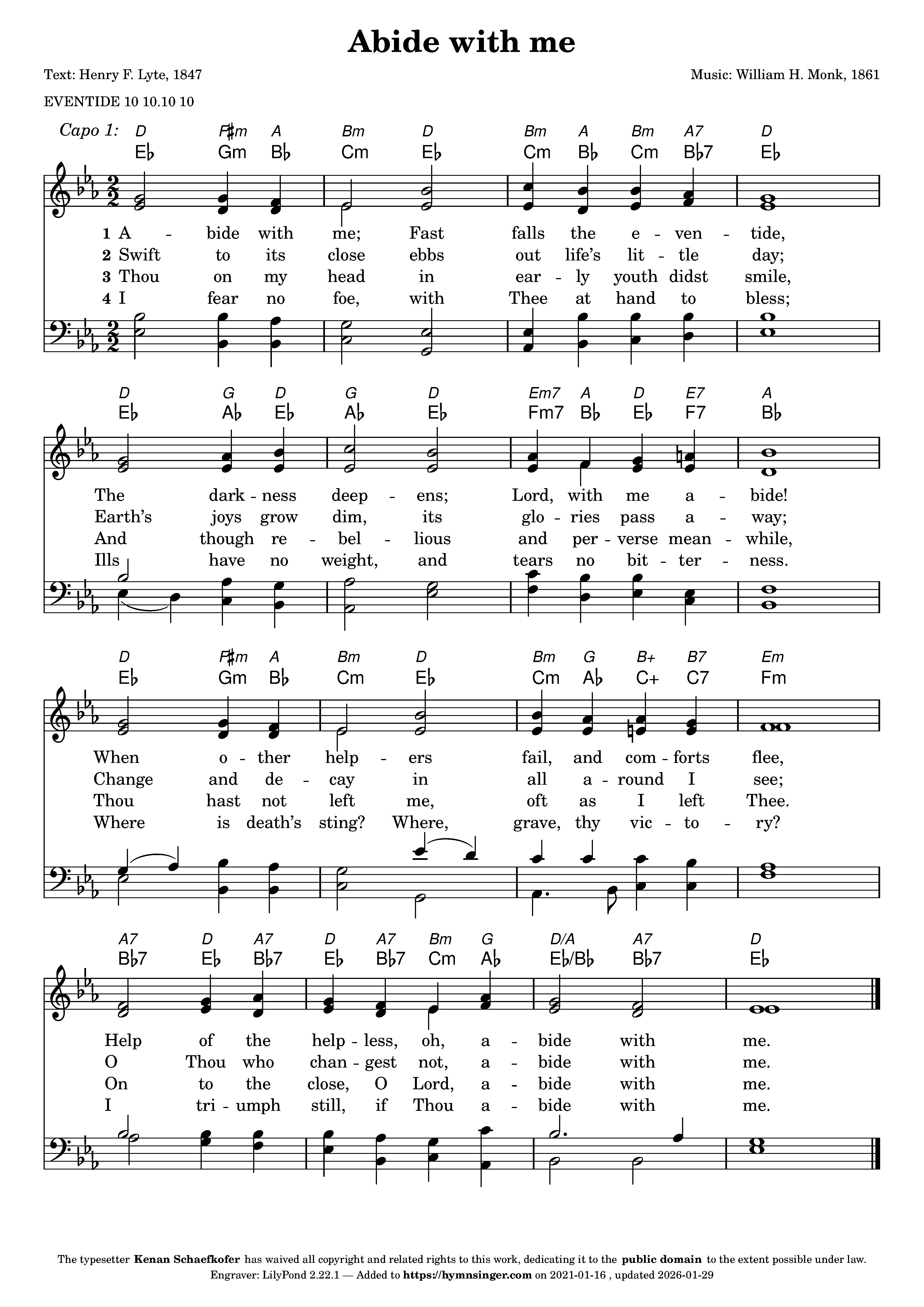
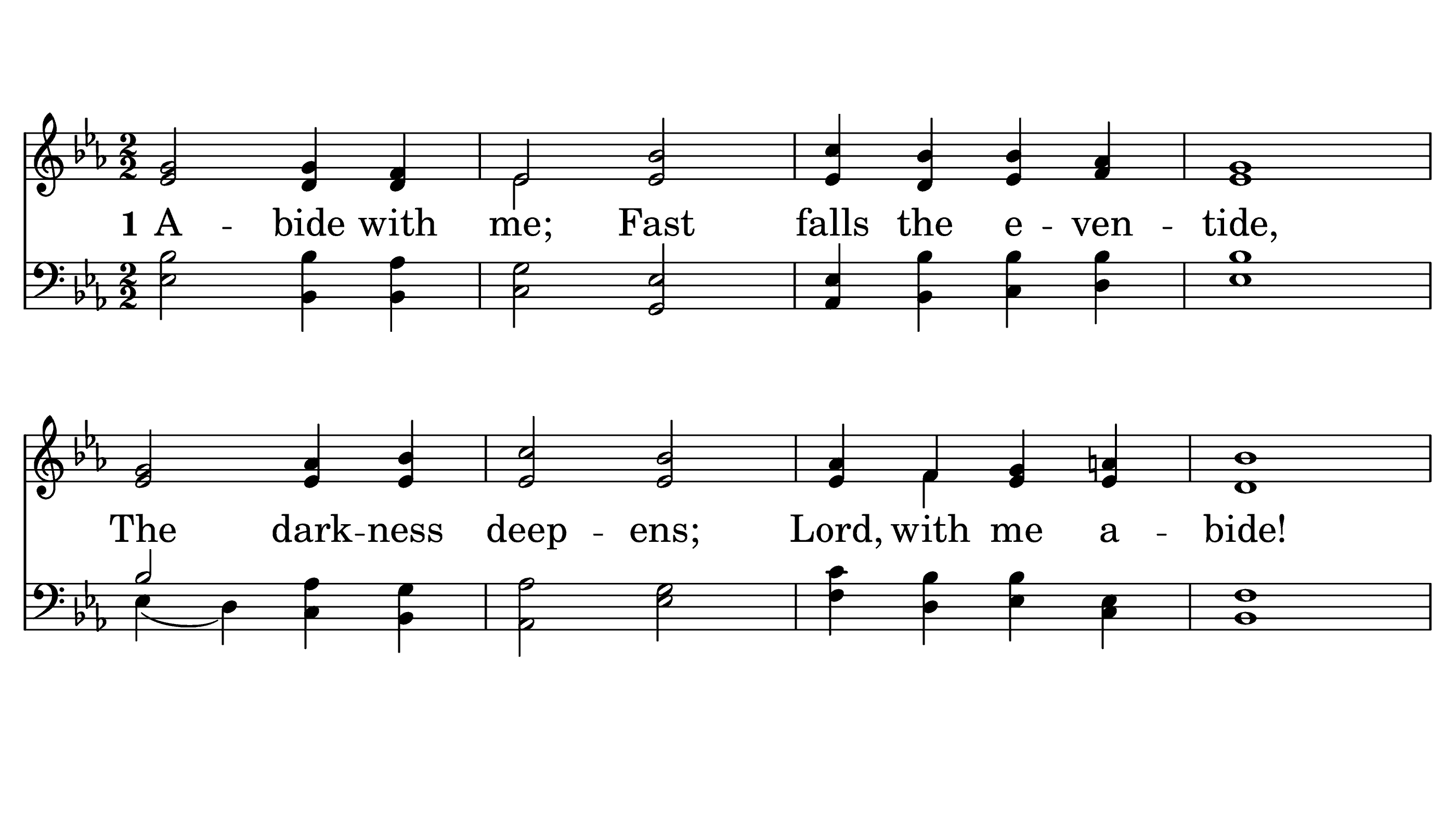
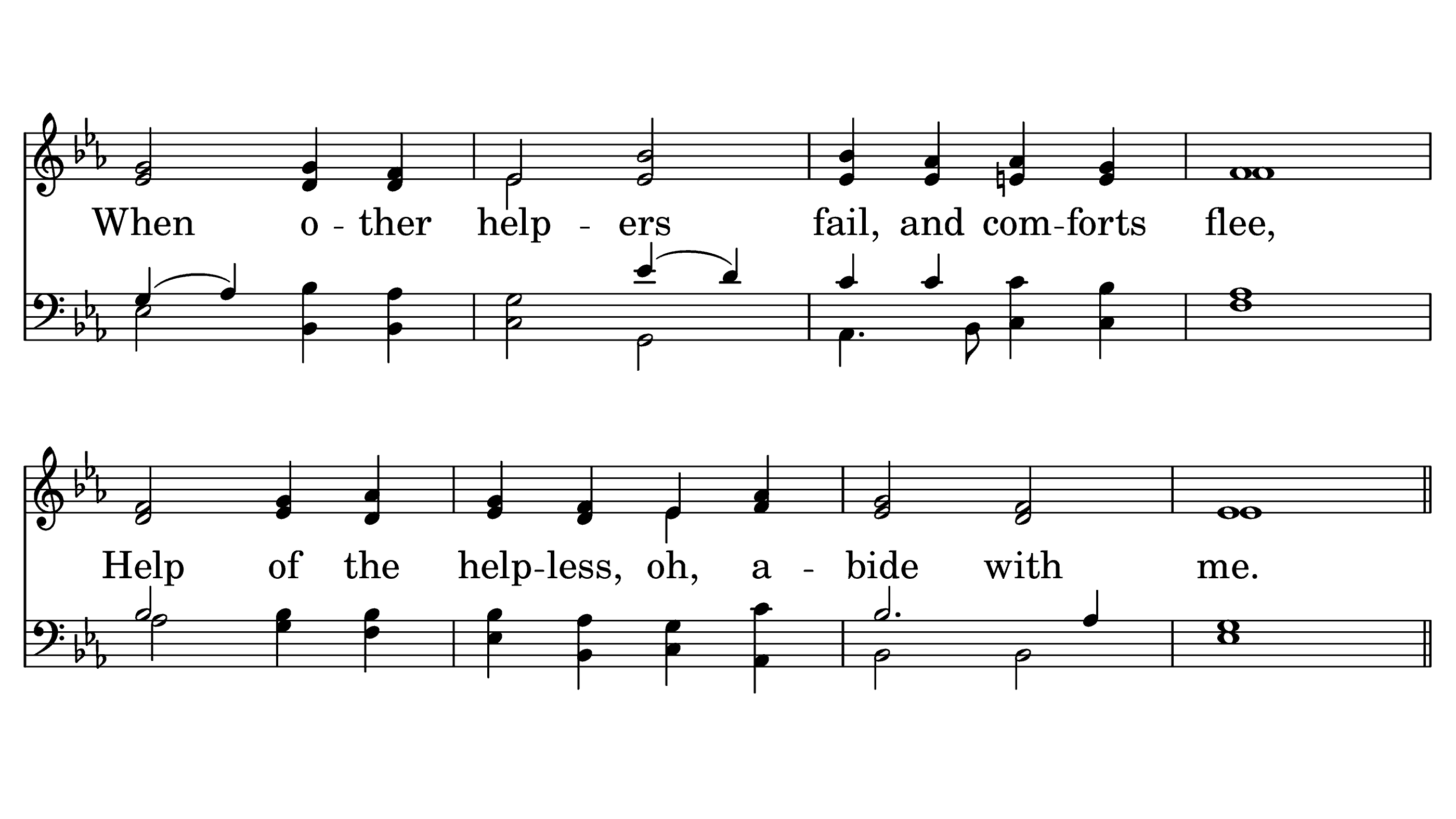
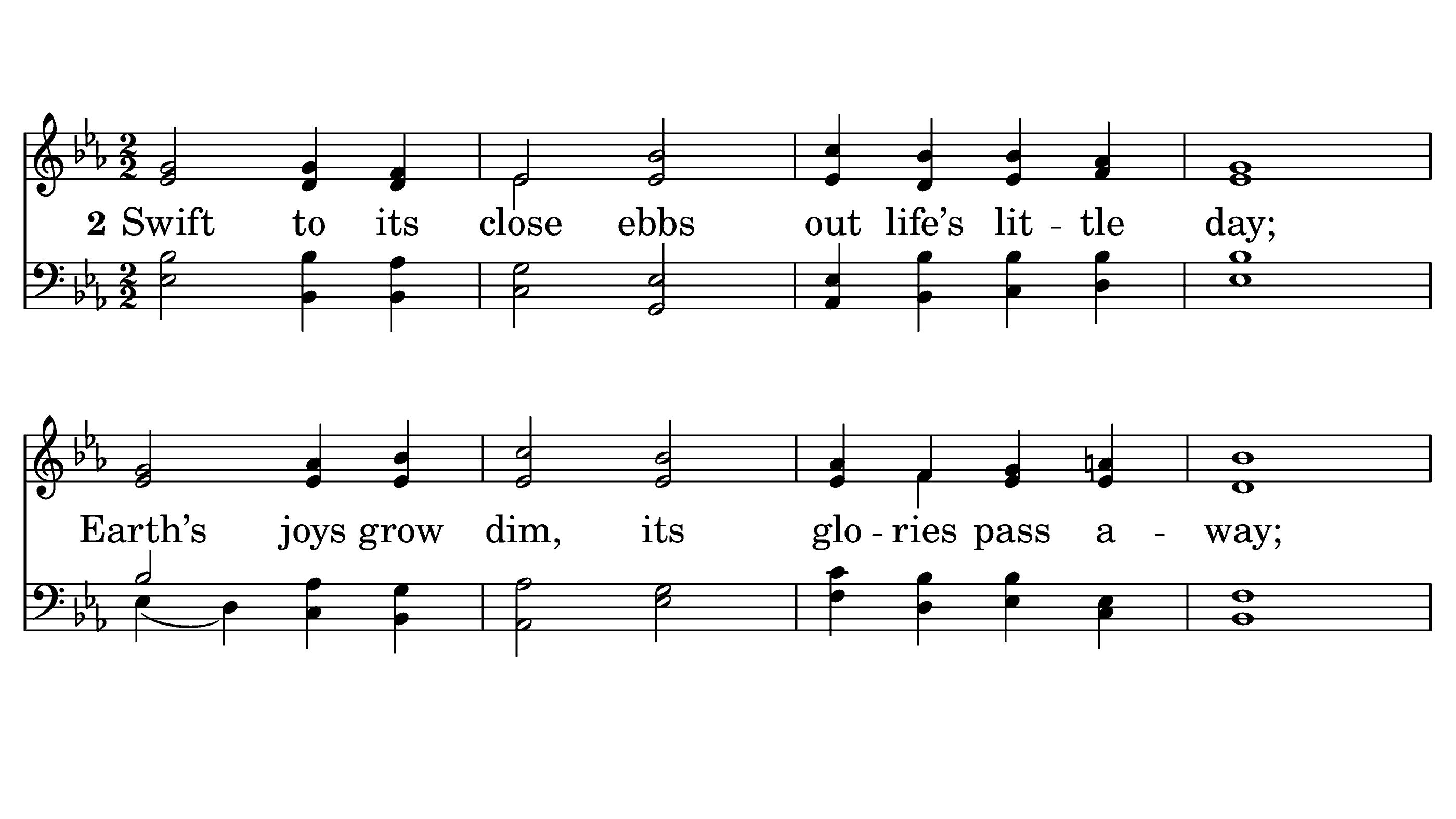
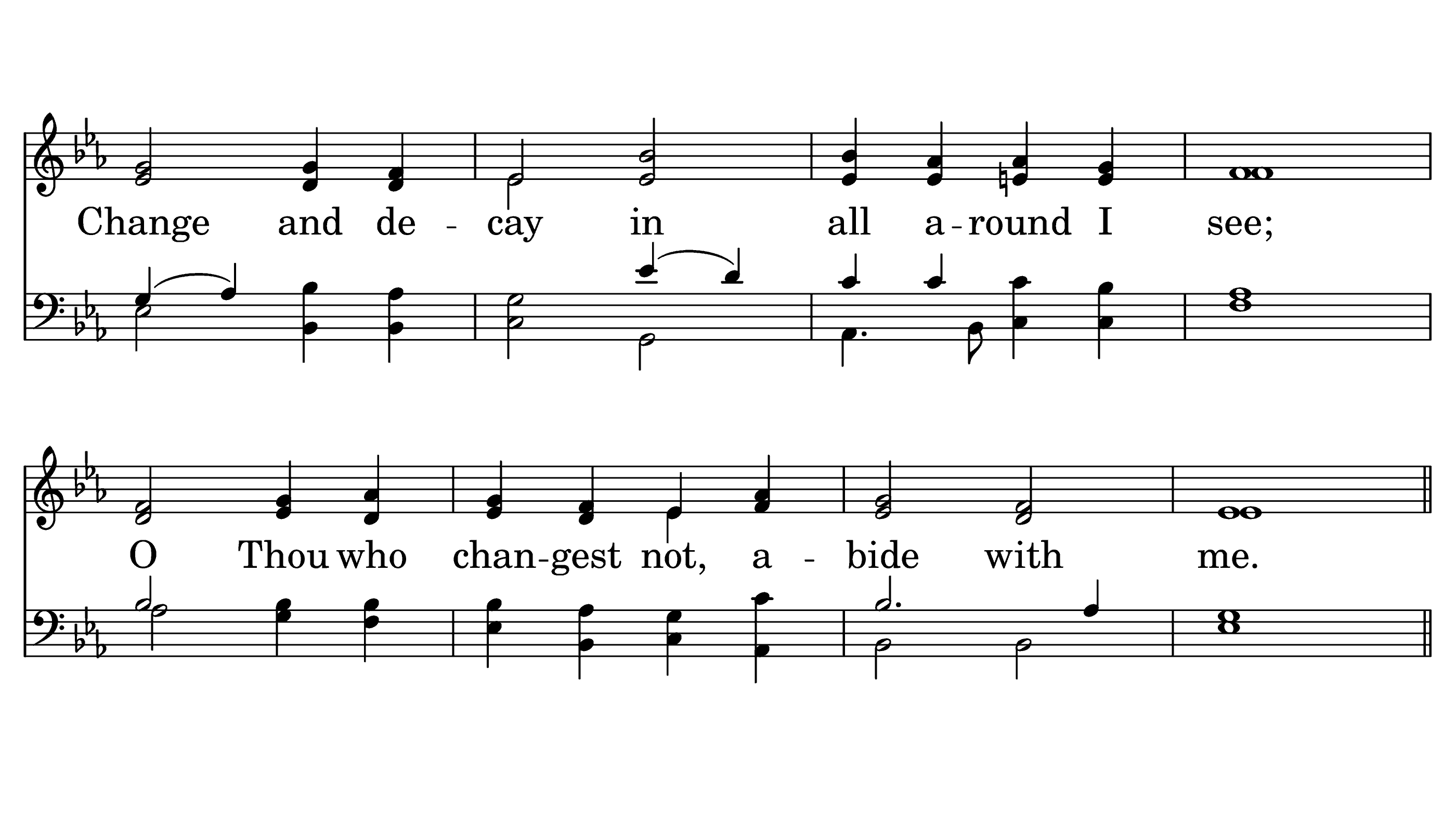
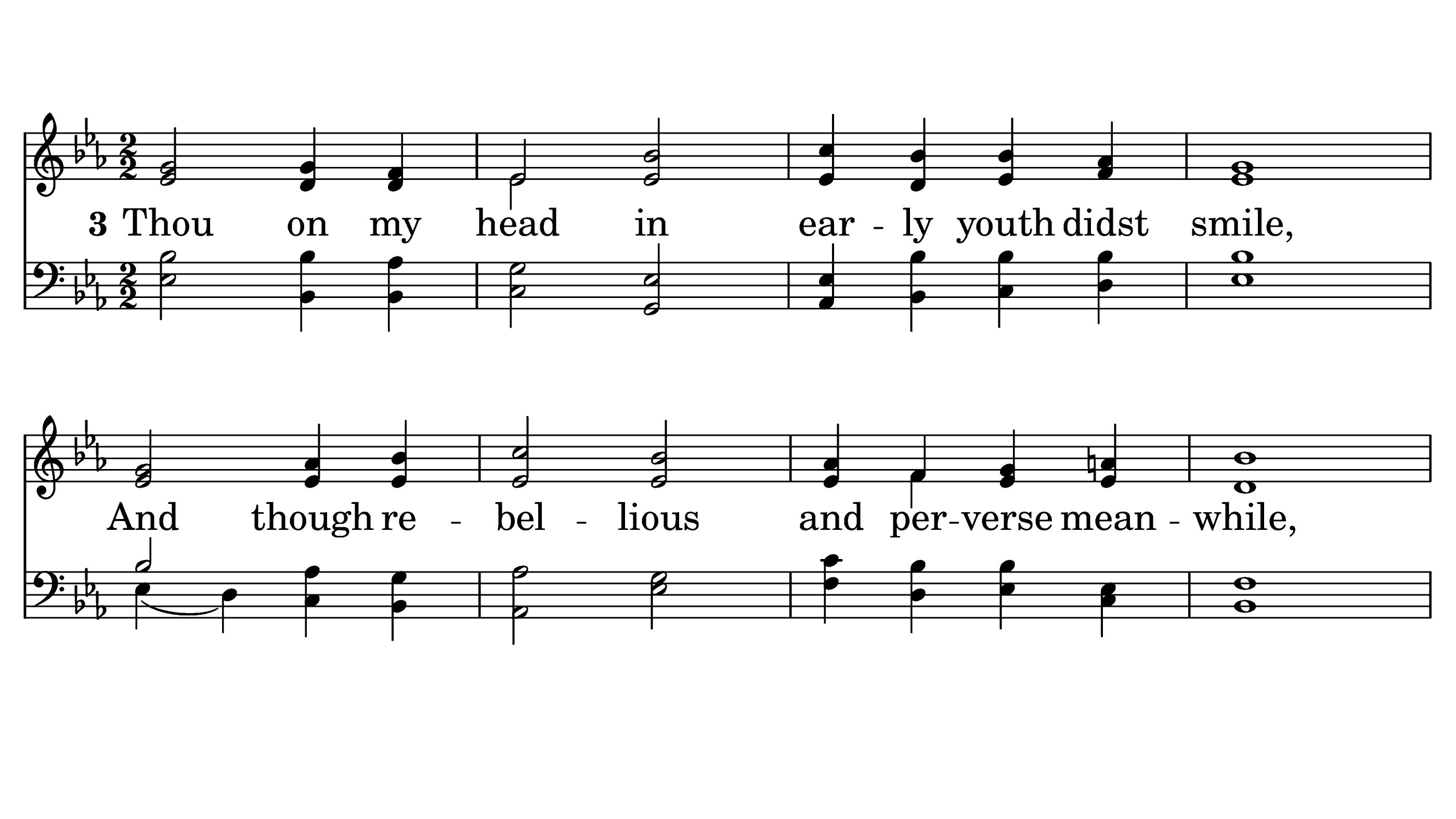
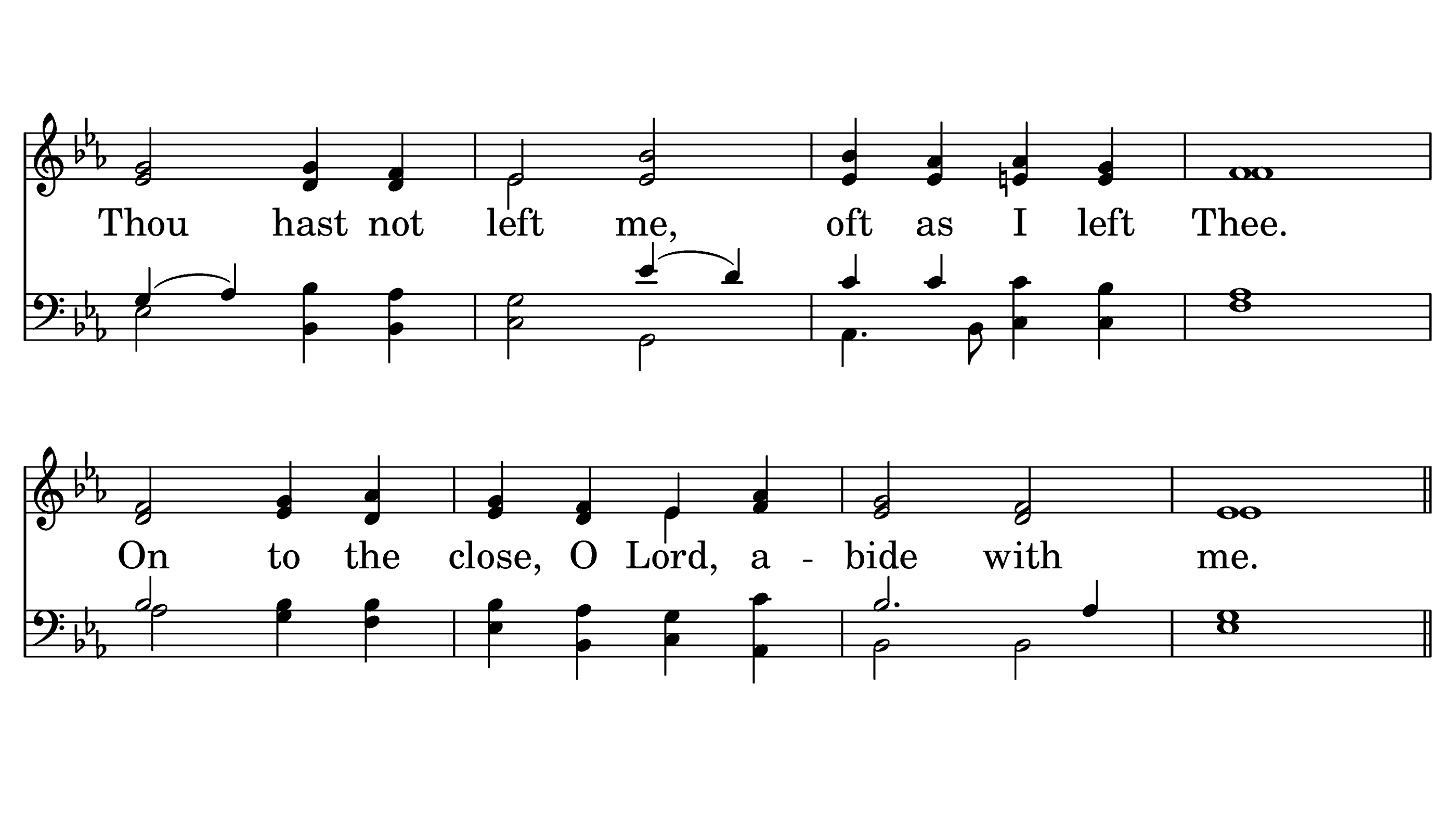
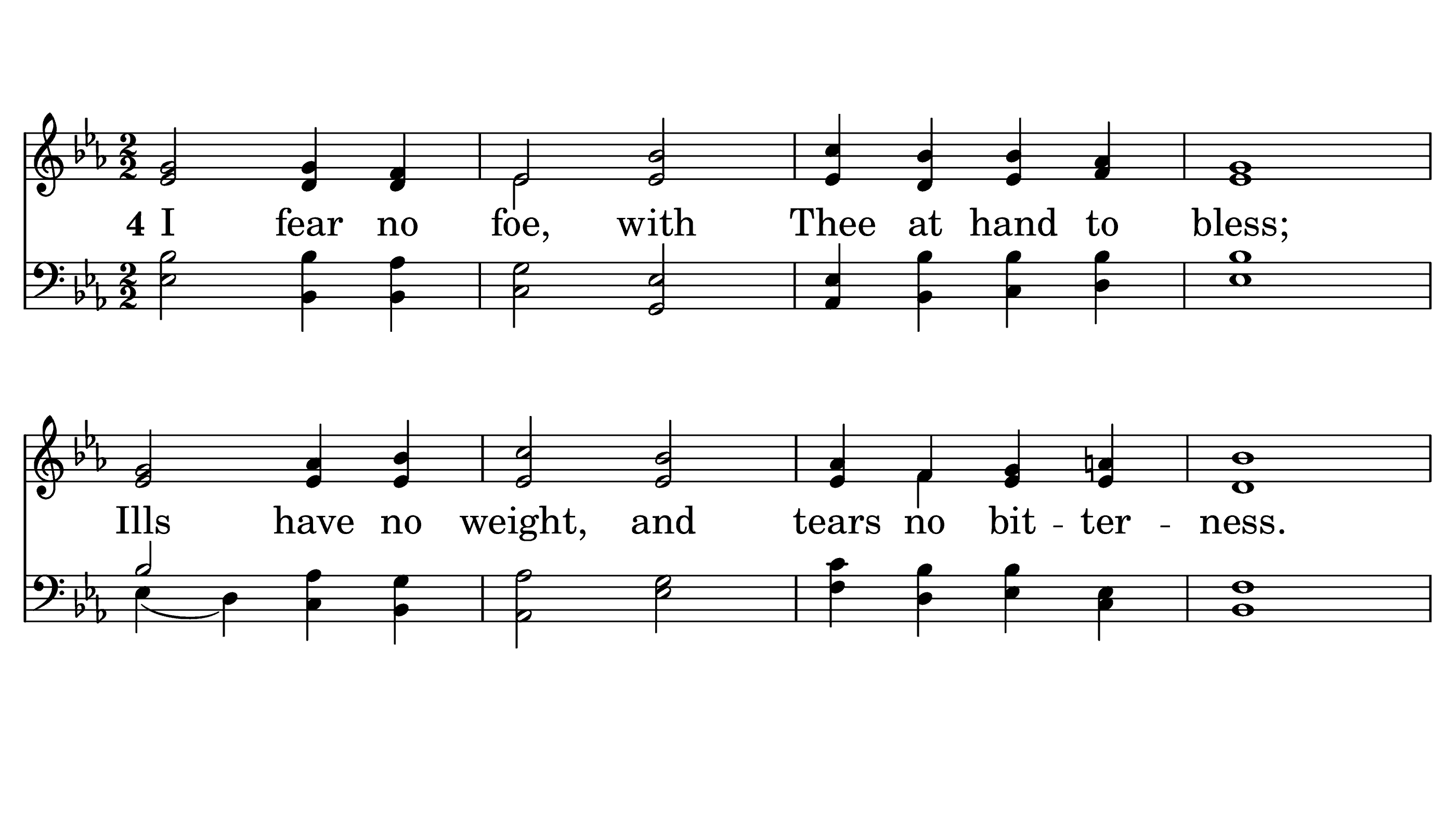
Soprano volume adjust. Soprano sings the highest, most important notes (the melody). Their notes are seen above the lyrics.
|
|
|---|---|
|
A
Alto volume adjust. Alto is lower than soprano, on the staff above the lyrics. They sing a harmony that supports the soprano's melody, so their notes might not sound song-like by themselves.
|
|
|
T
Tenor volume adjust. Tenor is higher than bass, on the staff below the lyrics. They sing a harmony that supports the soprano's melody, so their notes might not sound song-like by themselves.
|
|
|
B
Bass volume adjust. Bass sings the lowest notes on the staff below the lyrics. Their notes provide a foundation for all the other parts.
|
| Title: | Abide with me |
| Text: | Henry F. Lyte, 1847 |
| Tune: | EVENTIDE |
| Music: | William H. Monk, 1861 |
| Key: | E-flat major |
| Meter: | 10 10.10 10 |
| Date Added: | 2021/01/16 |
| (PDF) | (PDF) |
(PDF)
(
?
(Beta) The melody and chords of the leadsheet, with a ukulele fretboard diagram for each chord change. Standard GCEA tuning. Transposes with the arrows.
)
|
(PDF)
(
?
(Beta) Shapenotes mean that each pitch in "do, re, mi, fa, so, la, ti" get one of 7 shapes. This supplemental data may improve sight-reading over time.
)
|
(PDF)
(
?
(Beta) The older four-shape system of the Sacred Harp and Southern Harmony: "fa, sol, la" repeats for each tetrachord, with "mi" on the seventh. Minor tunes begin on la.
)
|
(PDF)
(
?
Clairnotes is easier than normal music, without any ♯ or ♭ signs or key signatures. Every pitch has its own vertical position. Click for more details.
)
|